Buy schachclub.eu ?
We are moving the project
schachclub.eu .
Are you interested in purchasing the domain
schachclub.eu ?
domain@kv-gmbh.de · 0541-91531010
Buy schachclub.eu ?
What is the difference between il faut que and il faut?
"Il faut" is used to express a general necessity or obligation, while "il faut que" is used to introduce a specific action or event that is necessary or required. For example, "il faut manger" means "it is necessary to eat" in a general sense, while "il faut que tu manges" means "you need to eat" in a specific sense. "Il faut" is used to make a general statement about what is necessary, while "il faut que" is used to specify what needs to be done. **
When do you use il faut and il ne faut pas?
"Il faut" is used to express what is necessary or required, while "il ne faut pas" is used to express what is not allowed or should be avoided. For example, you would use "il faut" to say "il faut étudier pour réussir" (it is necessary to study to succeed), and "il ne faut pas" to say "il ne faut pas fumer dans ce lieu" (smoking is not allowed in this place). These expressions are used to give advice, make recommendations, or set rules. **

Similar search terms for Valpolicella-Classico-Superiore-Il
Top-Angebote
Products related to Valpolicella-Classico-Superiore-Il:
-
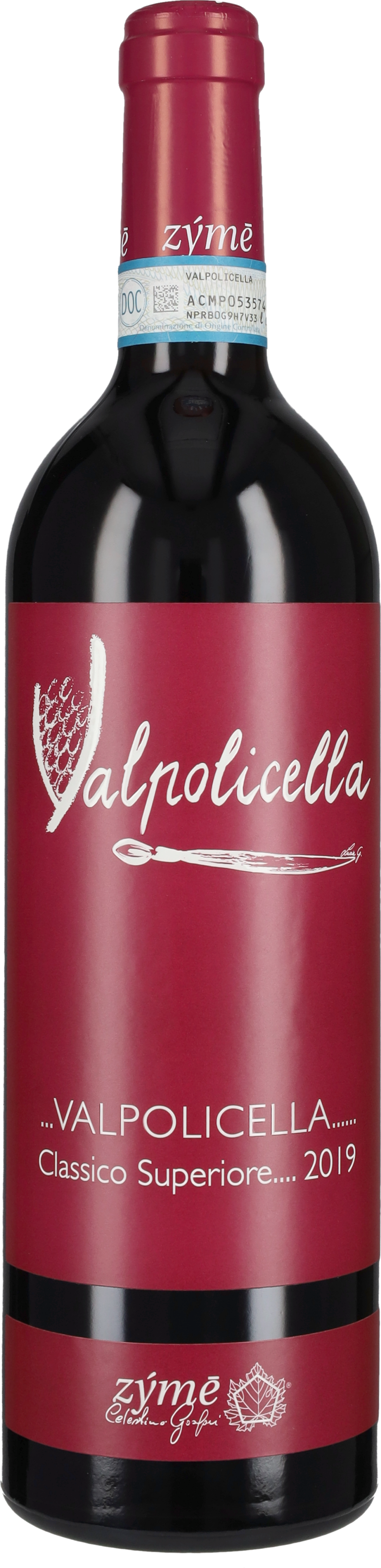
Valpolicella Classico Superiore Zymé 2019The Valpolicella Classico Superiore Ripasso by Zyme is the wine that perhaps is the soul of the Valpolicella beautifully reinterpreted by Celestino Gaspari, winemaker and owner of this fabulous cellar Venetian. A Valpolicella Superiore that is fermented with the ancient technique of the Ripasso which provides that in January, when it finishes the drying of the skins of the grapes that will give life to Amarone, the Valpolicella Classico Superiore by Zyme performs a second fermentation on the skins of Amarone for about 14 days. A precisely refresher that gives structure, elegance and softness to this Valpolicella which is naturally soothing and enveloping. The label, always very unique in style Zyme, represents the maroon of this wine with the inscription "Valpolicella" incomplete representing humility and respect with which the winemaker is starting to approach this great classic, whose level quality must be constantly refined and improved. The nose gives off notes of ripe cherry, cherry and plum slightly wilted and never fails to deliver its softness and its enveloping known, well accompanied by savory and spicy finale...36,00 £*Shipping: 48,00 £Secure redirect to the provider
-
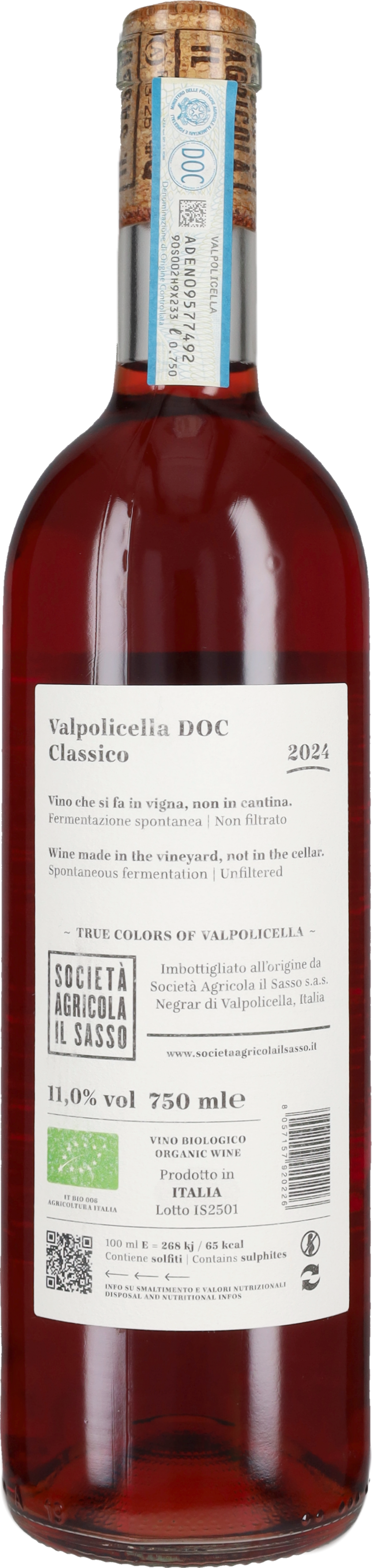
Valpolicella Classico Il Sasso 2024Il Valpolicella Classico della società agricola Il Sasso è un rosso tipico di questa nota zona enologica veneta realizzato a partire da un assemblaggio di uve autoctone quali Corvina, Corvinone e Rondinella. Si distingue fin da subito da altre etichette della zona come un’espressione unica e volutamente lontana dagli standard organolettici della denominazione, giocata al 100% su leggerezza e bevibilità. Un’interpretazione di Valpolicella più vera e diretta, come ama definirla Stefano Bellamoli, il vigneron di casa. La società agricola Il Sasso produce questo Valpolicella Classico a sud di Negrar, nel cuore della zona classica della denominazione, a 300 metri di altitudine su terreni aspri ricchi di calcarenite gialla, una roccia sedimentaria simile al tufo, di colore giallo e ricca di fossili marini. In vigna la viticoltura è sostenibile “l’unica agricoltura possibile” secondo Stefano che ritroviamo in etichetta contraddistinta dalla certificazione biologica. In cantina non si ricorre ad alcun tipo di trucchetto enologico, la fermentazione è spontanea a partire da lieviti indigeni e ha luogo in piccoli tini di acciaio, dove il vino sosta fino a Primavera prima dell’imbottigliamento. Il Valpolicella Classico di Il Sasso è un ritratto atipico di Valpolicella fin dal colore che si mostra rosso scarico nel bicchiere con riflessi quasi rosati. Al naso è molto profumato e leggiadro, caratterizzato da note di piccoli frutti rossi, fiori freschi ed erbe spontanee mentre in bocca è dritto, succoso, asciutto con tannini molto controllati. Ottimo da bere appena fresco all’ora dell’aperitivo in abbinata a un bel tagliere di salumi e di formaggi freschi. Pronti a scoprire insieme a Stefano de Il Sasso il nuovo volto, agile e beverino, della Valpolicella Classica?19,00 £*Shipping: 48,00 £Secure redirect to the provider
-
Valpolicella Classico Superiore 'Sant'Urbano' Speri 2023The Valpolicella Classico Superiore “Sant'Urbano” by Speri is a Venetian red wine, fruity and of good intensity, produced in the magnificent hilly area northwest of Verona. It is a wine with a typically territorial face, both for the choice of grape varieties and for the winemaking process. It is made with the indigenous red grape varieties historically grown in Valpolicella, mainly Corvina veronese, Rondinella, and Molinara, with a slight drying of the grapes. Aging in wood allows the wine to evolve towards notes of good complexity and expressive maturity, making it a red of good structure and tasting persistence. The “Sant'Urbano” is a Valpolicella Classico Superiore that originates from one of the symbol wineries of the territory. Founded around the mid-nineteenth century, the Speri estate is located in the Pedemonte area of San Pietro in Cariano, in the beating heart of Valpolicella, managing a heritage of about 60 hectares of owned vineyards. This particular interpretation of Valpolicella Classico stands out for its richness and intensity, coming closer to its older brothers Ripasso and Amarone than to the young and a smooth red traditionally produced in the area. The grapes of Corvina veronese, Rondinella, Molinara, and other ancient indigenous red berry varieties come from pergola-trained vineyards cultivated in Monte Sant’Urbano, on land of ancient volcanic origin. A true estate cru that has always provided clusters with a rich and elegant aromatic profile. The Valpolicella wine “Sant'Urbano”, produced by the historic Speri winery, is a red that originates from a process of dried grapes for a period of about three weeks. Fermentation takes place in stainless steel tanks. After malolactic fermentation in concrete, the wine matures for 18 months in Allier oak tonneaux. In the glass, it has a rather intense ruby red color. The bouquet offers mature aromas of red fruit, notes of sour cherry, mixed berry jam, and soft spices. The sip is rich, broad, enveloping, and extends towards a harmonious and delicately spiced finish.19,00 £*Shipping: 48,00 £Secure redirect to the provider
-
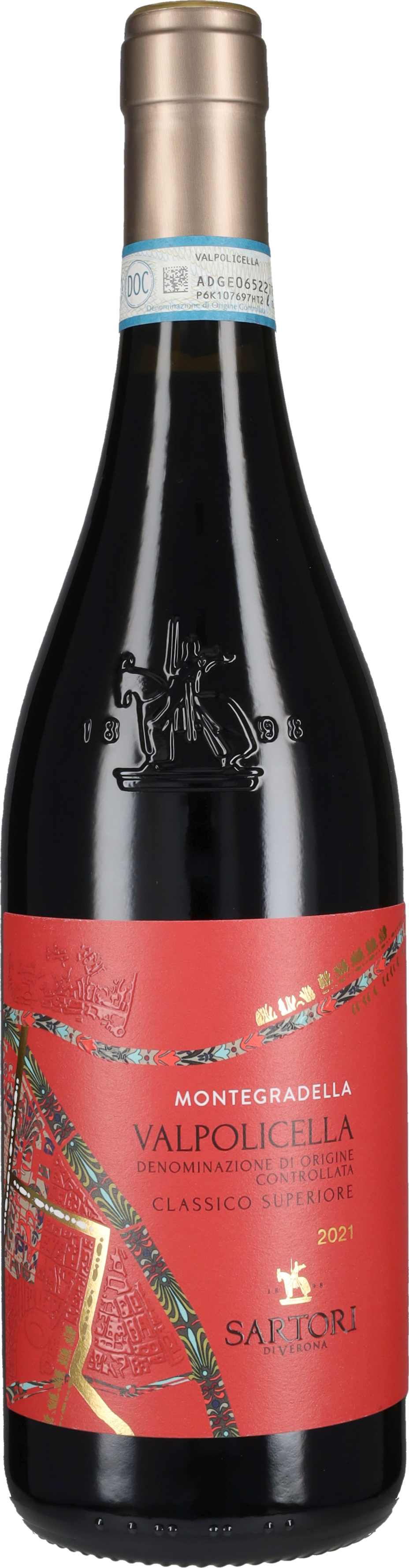
Valpolicella Classico Superiore 'Montegradella' Sartori 2021Sartori's Valpolicella Classico Superiore "Montegradella" is the label that best represents the traditions of the Verona area. It is the oldest and most representative red wine, made from native red grape varieties historically cultivated in this beautiful hilly area. Partial ageing in wood allows the wine to evolve perfectly, always keeping the varietal characteristics of the vines in the foreground. Due to its smoothness and fragrance, it is a red wine particularly suitable for pairing with pasta with meat sauce, baked pasta, poultry, roasted white meats and small game on a spit.Montegradella is a Valpolicella Classico Superiore wine produced by one of the most important and representative wineries in the Verona area. The Corvina Veronese, Corvinone, Rondinella and Croatina grapes come from the Montegradella vineyards, which are cultivated in the Classic Valpolicella area, on highly suitable calcareous-clayey soils. The sunny hillside exposure and the mild, consistently breezy climate allow for the harvest of perfectly ripe and healthy grapes. The best bunches are fermented at a controlled temperature, with a maceration period on the skins of about ten days and a 10-20% bleeding of the must to increase concentration and aromatic richness. The wine is aged for 18-24 months in concrete tanks and large oak barrels and completes its ageing period with 4 months in the bottle.Sartori's Valpolicella Classico Superiore "Montegradella" red wine is the true symbol of the region's tradition of producing fruity wines that are extremely pleasant to drink. In the glass, it has a beautiful bright and brilliant ruby red colour. The bouquet offers aromas of small red berries, cherry, currant, morello cherry and raspberry, with delicate hints of spice, floral notes and fresh almond. The palate is agile and smooth, characterised by ripe, juicy fruit, leading to a harmonious finish with a pleasant freshness and subtle spicy notes.14,00 £*Shipping: 48,00 £Secure redirect to the provider

-
Why is it souhaite-t-il and not souhaite-s-il?
In French, the pronoun "il" (he) is combined with the verb "souhaiter" (to wish) to form the phrase "souhaite-t-il" because of the rule of verb inversion in interrogative sentences. When forming a question in French, the subject pronoun and the verb are inverted, so "souhaite-t-il" follows this rule. The "t" is added to create a liaison between the verb and the pronoun, making the pronunciation smoother. **
-
What are your tips for the German Classico?
To enjoy the German Classico, make sure to immerse yourself in the rich history and intense rivalry between Bayern Munich and Borussia Dortmund. Learn about the key players on both teams and their playing styles to appreciate the tactical battle on the field. Additionally, try to watch the match with friends or fellow fans to enhance the experience with lively discussions and friendly banter. Lastly, don't forget to savor the passion and excitement of one of the most anticipated matches in German football. **
-
What comes after il faudrait in French?
In French, "il faudrait" is followed by the infinitive form of a verb. This construction is used to express a suggestion or a polite request. For example, "il faudrait partir tôt" means "it would be necessary to leave early." **
-
How does "il faut" work in French?
"Il faut" is a common expression in French that is used to convey the idea of necessity or obligation. It is followed by an infinitive verb and is used to express what needs to be done or what is necessary in a given situation. For example, "Il faut manger" means "It is necessary to eat." This expression is used to give advice, make suggestions, or express general truths. **


What is an El, Sl, and Il?
An El, Sl, and Il are all suffixes used in the English language to form adjectives. "El" is used to form adjectives that mean "pertaining to" or "characterized by," such as in the word "musical." "Sl" is used to form adjectives that mean "tending to" or "inclined to," such as in the word "careful." "Il" is used to form adjectives that mean "having the nature of" or "capable of," such as in the word "flexible." These suffixes help to create new adjectives by modifying the meaning of the base word. **
'Against the grandmaster in chess?'
Playing against a grandmaster in chess can be an incredibly challenging and intimidating experience. Grandmasters are among the best players in the world, with a deep understanding of the game and exceptional strategic skills. It is important to approach the game with humility and a willingness to learn, as playing against a grandmaster can provide valuable insights and opportunities for improvement. While the odds of winning may be slim, the experience of facing off against a grandmaster can be a valuable learning opportunity and a memorable experience for any chess enthusiast. **
Top-Angebote
Products related to Valpolicella-Classico-Superiore-Il:
-
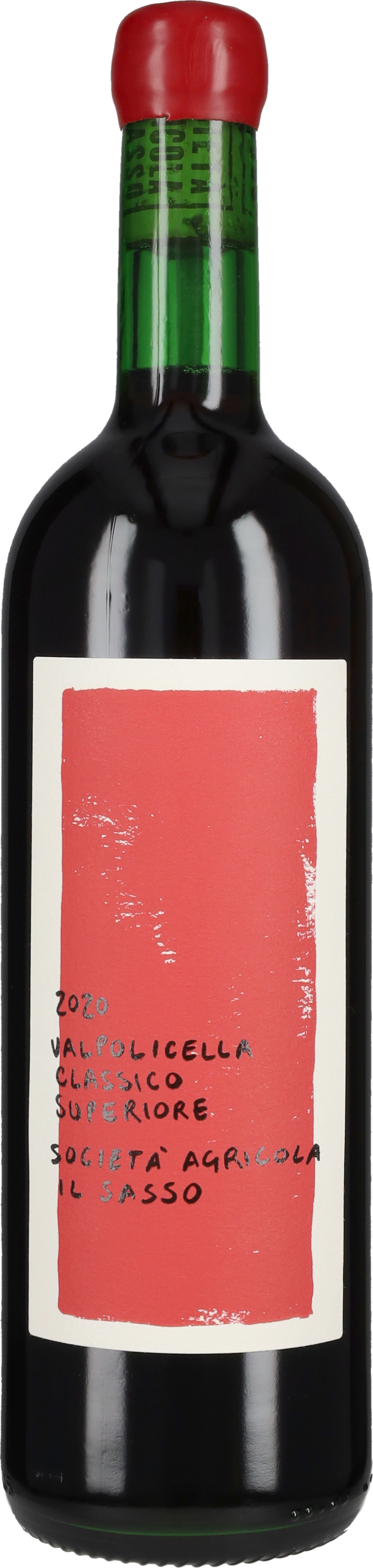
Valpolicella Classico Superiore Il Sasso 2020The Valpolicella Classico Superiore from the Veronese winery Il Sasso is a pure and sincere interpretation of the area. This young production reality, located in Montericco Negrar, a few kilometers north of Verona, manages about ten hectares of organic vineyards, with an agronomic approach aimed at promoting biodiversity and soil vitality. The term “Classico” identifies the historically most vocated area of the denomination, while the mention “Superiore” identifies a higher alcohol content compared to the minimum requirement established by the regulations for normal Valpolicella. Il Sasso Valpolicella Classico Superiore comes from a blend of the indigenous grape varieties Corvina, Corvinone, and Rondinella. The vineyards are located south of Negrar, at an altitude of 300 meters, on harsh soils with yellow calcarenite, a yellow sedimentary rock similar to tuff and rich in marine fossils. After harvesting and careful selection, the bunches are laid to rest for about a week in small crates and, in the meantime, a pied de cuve is prepared to start the alcoholic fermentation with only indigenous yeasts. The maceration on the skins lasts for about a month and the mass is then transferred to steel and concrete tanks for maturation for 12 months. Finally, the wine, without undergoing invasive filtration, is bottled, where it rests for at least another 6 months before release. To the eye, the red Valpolicella Classico Superiore Il Sasso presents a ruby red hue. The aromas on the nose range from notes of cherry, sour cherry, woodland spices, and underbrush, to pleasant wine sensations. On the palate, it is juicy and fragrant, fresh and with great territorial adherence. An artisanal label capable of seducing with its pronounced typicity and versatility in pairings.Cuve to initiate alcoholic fermentation with only indigenous yeasts. The maceration on the skins lasts for about a month and the mass is then transferred to steel and concrete tanks for 12 months of maturation. Finally, the wine, without undergoing invasive filtration, is bottled, where it rests for at least another 6 months before release. In appearance, the Valpolicella Classico Superiore Il Sasso shows a ruby red color. The aromas on the nose range from notes of cherry, sour cherry, woodland spices, and underbrush, to pleasant wine sensations. On the palate, it is juicy and fragrant, fresh and with great territorial adherence. An artisanal label capable of seducing with its marked typicity and versatility in pairings.18,00 £*Shipping: 48,00 £Secure redirect to the provider
-
Valpolicella Classico Superiore Ripasso 'Il Sestante' Tommasi 2022Il Valpolicella Classico Superiore Ripasso “Il Sestante” di Tommasi, nonostante sia la più recente tipologia di vino del territorio, in poco tempo ha saputo conquistare gli appassionati, non solo italiani, ma di tutto il mondo. Condivide con i vini più giovani la piacevole fragranza fruttata e con il famoso Amarone la ricchezza e la complessità aromatica. Il suo fascino risiede proprio in questa sua straordinaria capacità di esprimere le migliori tradizioni di un’area che vanta una storia millenaria nella produzione di grandi rossi, che affonda le radici addirittura nell’epoca degli antichi Romani. “Il Sestante” è un Valpolicella Classico Superiore Ripasso realizzato da una delle cantine più famose di questo meraviglioso territorio collinare a nord di Verona. La cantina Tommasi è stata fondata agli inizi del ‘900 a San Pietro in Cariano e ancora oggi rappresenta un’eccellenza di livello assoluto. Il vino nasce da un assemblaggio delle uve dei vitigni classici del territorio: Corvina, Rondinella e Molinara. Al termine della vendemmia, i migliori grappoli sono avviati alla fermentazione in vasche d’acciaio, con un periodo di macerazione sulle bucce della durata di una dozzina di giorni. La seconda parte della lavorazione prevede una rifermentazione sulle vinacce dell’Amarone per circa 8 giorni. Il vino matura poi per 12 mesi in botti di rovere di Slavonia da 65 ettolitri e completa il percorso d’affinamento con alcuni mesi in bottiglia. Il Valpolicella Classico Superiore Ripasso “Il Sestante” di Tommasi è un rosso tipico di quest’area del Veneto, capace di coniugare la tipicità varietale delle uve con le consuetudini enologiche più antiche del Veneto. Nel calice si presenta di colore rosso rubino piuttosto scuro con leggeri riflessi granato. Il profilo olfattivo è intenso e ricco, con profumi di ciliegia matura, amarena, frutta rossa, sfumature di confettura di piccoli frutti di bosco, cenni di vaniglia e di morbide spezie orientali. Al palato è caratterizzato da una trama tannica vellutata, con aromi densi e avvolgenti. Il sorso è armonioso e ricco di sfumature aromatiche, che s’allungano verso un finale lungo e persistente.16,00 £*Shipping: 48,00 £Secure redirect to the provider
-
Valpolicella Classico Superiore Zymé 2019The Valpolicella Classico Superiore Ripasso by Zyme is the wine that perhaps is the soul of the Valpolicella beautifully reinterpreted by Celestino Gaspari, winemaker and owner of this fabulous cellar Venetian. A Valpolicella Superiore that is fermented with the ancient technique of the Ripasso which provides that in January, when it finishes the drying of the skins of the grapes that will give life to Amarone, the Valpolicella Classico Superiore by Zyme performs a second fermentation on the skins of Amarone for about 14 days. A precisely refresher that gives structure, elegance and softness to this Valpolicella which is naturally soothing and enveloping. The label, always very unique in style Zyme, represents the maroon of this wine with the inscription "Valpolicella" incomplete representing humility and respect with which the winemaker is starting to approach this great classic, whose level quality must be constantly refined and improved. The nose gives off notes of ripe cherry, cherry and plum slightly wilted and never fails to deliver its softness and its enveloping known, well accompanied by savory and spicy finale...36,00 £*Shipping: 48,00 £Secure redirect to the provider
-
Valpolicella Classico Il Sasso 2024Il Valpolicella Classico della società agricola Il Sasso è un rosso tipico di questa nota zona enologica veneta realizzato a partire da un assemblaggio di uve autoctone quali Corvina, Corvinone e Rondinella. Si distingue fin da subito da altre etichette della zona come un’espressione unica e volutamente lontana dagli standard organolettici della denominazione, giocata al 100% su leggerezza e bevibilità. Un’interpretazione di Valpolicella più vera e diretta, come ama definirla Stefano Bellamoli, il vigneron di casa. La società agricola Il Sasso produce questo Valpolicella Classico a sud di Negrar, nel cuore della zona classica della denominazione, a 300 metri di altitudine su terreni aspri ricchi di calcarenite gialla, una roccia sedimentaria simile al tufo, di colore giallo e ricca di fossili marini. In vigna la viticoltura è sostenibile “l’unica agricoltura possibile” secondo Stefano che ritroviamo in etichetta contraddistinta dalla certificazione biologica. In cantina non si ricorre ad alcun tipo di trucchetto enologico, la fermentazione è spontanea a partire da lieviti indigeni e ha luogo in piccoli tini di acciaio, dove il vino sosta fino a Primavera prima dell’imbottigliamento. Il Valpolicella Classico di Il Sasso è un ritratto atipico di Valpolicella fin dal colore che si mostra rosso scarico nel bicchiere con riflessi quasi rosati. Al naso è molto profumato e leggiadro, caratterizzato da note di piccoli frutti rossi, fiori freschi ed erbe spontanee mentre in bocca è dritto, succoso, asciutto con tannini molto controllati. Ottimo da bere appena fresco all’ora dell’aperitivo in abbinata a un bel tagliere di salumi e di formaggi freschi. Pronti a scoprire insieme a Stefano de Il Sasso il nuovo volto, agile e beverino, della Valpolicella Classica?19,00 £*Shipping: 48,00 £Secure redirect to the provider
-
What is the difference between il faut que and il faut?
"Il faut" is used to express a general necessity or obligation, while "il faut que" is used to introduce a specific action or event that is necessary or required. For example, "il faut manger" means "it is necessary to eat" in a general sense, while "il faut que tu manges" means "you need to eat" in a specific sense. "Il faut" is used to make a general statement about what is necessary, while "il faut que" is used to specify what needs to be done. **
-
When do you use il faut and il ne faut pas?
"Il faut" is used to express what is necessary or required, while "il ne faut pas" is used to express what is not allowed or should be avoided. For example, you would use "il faut" to say "il faut étudier pour réussir" (it is necessary to study to succeed), and "il ne faut pas" to say "il ne faut pas fumer dans ce lieu" (smoking is not allowed in this place). These expressions are used to give advice, make recommendations, or set rules. **
-
Why is it souhaite-t-il and not souhaite-s-il?
In French, the pronoun "il" (he) is combined with the verb "souhaiter" (to wish) to form the phrase "souhaite-t-il" because of the rule of verb inversion in interrogative sentences. When forming a question in French, the subject pronoun and the verb are inverted, so "souhaite-t-il" follows this rule. The "t" is added to create a liaison between the verb and the pronoun, making the pronunciation smoother. **
-
What are your tips for the German Classico?
To enjoy the German Classico, make sure to immerse yourself in the rich history and intense rivalry between Bayern Munich and Borussia Dortmund. Learn about the key players on both teams and their playing styles to appreciate the tactical battle on the field. Additionally, try to watch the match with friends or fellow fans to enhance the experience with lively discussions and friendly banter. Lastly, don't forget to savor the passion and excitement of one of the most anticipated matches in German football. **
Similar search terms for Valpolicella-Classico-Superiore-Il
-
Valpolicella Classico Superiore 'Sant'Urbano' Speri 2023The Valpolicella Classico Superiore “Sant'Urbano” by Speri is a Venetian red wine, fruity and of good intensity, produced in the magnificent hilly area northwest of Verona. It is a wine with a typically territorial face, both for the choice of grape varieties and for the winemaking process. It is made with the indigenous red grape varieties historically grown in Valpolicella, mainly Corvina veronese, Rondinella, and Molinara, with a slight drying of the grapes. Aging in wood allows the wine to evolve towards notes of good complexity and expressive maturity, making it a red of good structure and tasting persistence. The “Sant'Urbano” is a Valpolicella Classico Superiore that originates from one of the symbol wineries of the territory. Founded around the mid-nineteenth century, the Speri estate is located in the Pedemonte area of San Pietro in Cariano, in the beating heart of Valpolicella, managing a heritage of about 60 hectares of owned vineyards. This particular interpretation of Valpolicella Classico stands out for its richness and intensity, coming closer to its older brothers Ripasso and Amarone than to the young and a smooth red traditionally produced in the area. The grapes of Corvina veronese, Rondinella, Molinara, and other ancient indigenous red berry varieties come from pergola-trained vineyards cultivated in Monte Sant’Urbano, on land of ancient volcanic origin. A true estate cru that has always provided clusters with a rich and elegant aromatic profile. The Valpolicella wine “Sant'Urbano”, produced by the historic Speri winery, is a red that originates from a process of dried grapes for a period of about three weeks. Fermentation takes place in stainless steel tanks. After malolactic fermentation in concrete, the wine matures for 18 months in Allier oak tonneaux. In the glass, it has a rather intense ruby red color. The bouquet offers mature aromas of red fruit, notes of sour cherry, mixed berry jam, and soft spices. The sip is rich, broad, enveloping, and extends towards a harmonious and delicately spiced finish.19,00 £*Shipping: 48,00 £Secure redirect to the provider
-
Valpolicella Classico Superiore 'Montegradella' Sartori 2021Sartori's Valpolicella Classico Superiore "Montegradella" is the label that best represents the traditions of the Verona area. It is the oldest and most representative red wine, made from native red grape varieties historically cultivated in this beautiful hilly area. Partial ageing in wood allows the wine to evolve perfectly, always keeping the varietal characteristics of the vines in the foreground. Due to its smoothness and fragrance, it is a red wine particularly suitable for pairing with pasta with meat sauce, baked pasta, poultry, roasted white meats and small game on a spit.Montegradella is a Valpolicella Classico Superiore wine produced by one of the most important and representative wineries in the Verona area. The Corvina Veronese, Corvinone, Rondinella and Croatina grapes come from the Montegradella vineyards, which are cultivated in the Classic Valpolicella area, on highly suitable calcareous-clayey soils. The sunny hillside exposure and the mild, consistently breezy climate allow for the harvest of perfectly ripe and healthy grapes. The best bunches are fermented at a controlled temperature, with a maceration period on the skins of about ten days and a 10-20% bleeding of the must to increase concentration and aromatic richness. The wine is aged for 18-24 months in concrete tanks and large oak barrels and completes its ageing period with 4 months in the bottle.Sartori's Valpolicella Classico Superiore "Montegradella" red wine is the true symbol of the region's tradition of producing fruity wines that are extremely pleasant to drink. In the glass, it has a beautiful bright and brilliant ruby red colour. The bouquet offers aromas of small red berries, cherry, currant, morello cherry and raspberry, with delicate hints of spice, floral notes and fresh almond. The palate is agile and smooth, characterised by ripe, juicy fruit, leading to a harmonious finish with a pleasant freshness and subtle spicy notes.14,00 £*Shipping: 48,00 £Secure redirect to the provider
-
Valpolicella Classico Superiore Domini Veneti 2023system of the Veronese pergola on terraces with dry stone walls, located at an altitude between 250 and 450 meters above sea level, with exposure facing southeast and southwest. The soils are quite heterogeneous, predominantly composed of clays and silt, with the presence of calcareous veins and rocks of ancient volcanic origin. The harvesting operations are all carried out manually, and the grapes are quickly brought to the winery for destemming and fermentation at a controlled temperature of 25-28 °C, with maceration on the skins for about ten days. Before bottling, the wine matures for a few months in wooden barrels. The Valpolicella Classico Superiore Domini Veneti wine is the highest expression of the typical wine of the territory. It is the perfect synthesis of the centuries-old interaction between indigenous grape varieties and territory, which combines the lively varietal fragrance and the harmonious softness of a brief passage in wood. In the glass, it presents itself with a bright ruby red color. Elegant and multifaceted, it offers floral notes of violet, aromas11,00 £*Shipping: 48,00 £Secure redirect to the provider
-
What comes after il faudrait in French?
In French, "il faudrait" is followed by the infinitive form of a verb. This construction is used to express a suggestion or a polite request. For example, "il faudrait partir tôt" means "it would be necessary to leave early." **
-
How does "il faut" work in French?
"Il faut" is a common expression in French that is used to convey the idea of necessity or obligation. It is followed by an infinitive verb and is used to express what needs to be done or what is necessary in a given situation. For example, "Il faut manger" means "It is necessary to eat." This expression is used to give advice, make suggestions, or express general truths. **
-
What is an El, Sl, and Il?
An El, Sl, and Il are all suffixes used in the English language to form adjectives. "El" is used to form adjectives that mean "pertaining to" or "characterized by," such as in the word "musical." "Sl" is used to form adjectives that mean "tending to" or "inclined to," such as in the word "careful." "Il" is used to form adjectives that mean "having the nature of" or "capable of," such as in the word "flexible." These suffixes help to create new adjectives by modifying the meaning of the base word. **
-
'Against the grandmaster in chess?'
Playing against a grandmaster in chess can be an incredibly challenging and intimidating experience. Grandmasters are among the best players in the world, with a deep understanding of the game and exceptional strategic skills. It is important to approach the game with humility and a willingness to learn, as playing against a grandmaster can provide valuable insights and opportunities for improvement. While the odds of winning may be slim, the experience of facing off against a grandmaster can be a valuable learning opportunity and a memorable experience for any chess enthusiast. **
* All prices are inclusive of VAT and, if applicable, plus shipping costs. The offer information is based on the details provided by the respective shop and is updated through automated processes. Real-time updates do not occur, so deviations can occur in individual cases. ** Note: Parts of this content were created by AI.