Buy schachclub.eu ?
We are moving the project
schachclub.eu .
Are you interested in purchasing the domain
schachclub.eu ?
domain@kv-gmbh.de · 0541-91531010
Buy schachclub.eu ?
Which lemma can I use to prove the pumping lemma?
To prove the pumping lemma for regular languages, you can use the lemma itself. The pumping lemma states that for any regular language L, there exists a constant p (the pumping length) such that any string s in L with length at least p can be divided into three parts, s = xyz, satisfying certain conditions. By using the pumping lemma, you can show that for any regular language, there exists a pumping length p such that any string in the language can be pumped to generate an infinite number of strings also in the language. **
How to apply the Pumping Lemma?
To apply the Pumping Lemma, you first assume that a language L is regular. Then, you choose a suitable string w from L that satisfies the conditions of the Pumping Lemma. Next, you decompose w into three parts, u, v, and x, such that w = uvx and |v| > 0 and |uv| ≤ p, where p is the pumping length given by the Pumping Lemma. Finally, you show that for any i ≥ 0, the string uv^ix is not in L, thus leading to a contradiction and proving that L is not regular. **


Similar search terms for Lemma
Top-Angebote
Products related to Lemma:
-
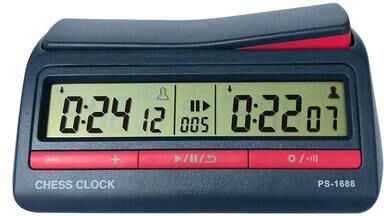
Everyday Crate ElitePro Digital Chess Timer & Go Game Clock With 42 Tournament Timing Modes ElitePro Digital Chess Timer & Go Game Clock With 42 Tournament Timing ModesEvery move counts when the pressure is on. Designed for competitive players, clubs, coaches, and tournament organizers, this advanced digital chess clock delivers precise, reliable time control for intense matches. With 42 preset timing rules across...64,97 $*Shipping: 0,00 $Secure redirect to the provider
-
Inspired Living Classic Staunton Wooden Chess Pieces Set (32pcs) Tournament Chessmen Replacement Set bBring the timeless elegance of chess back to your table with wooden chess pieces that feel as good as they look. This complete 32piece set is designed for players who want a classic, balanced style thats easy to recognize and satisfying to play...23,97 $*Shipping: 0,00 $Secure redirect to the provider
-
Multicon Wholesale Hub Professional Digital Chess Clock Timer With Count Up & Count Down For Tournament And Training Games Professional Digital Chess Clock Timer With Count Up & Count Down For Tournament And Training GamesExperience smoother, more competitive gameplay with this chess clock timer designed for players who value precision and focus. Whether you're preparing for tournaments, practicing strategy, or enjoying casual matches at home, this timer helps keep...103,97 $*Shipping: 0,00 $Secure redirect to the provider
-
Multisell Products Hub Easy To Play Chess Board Game Toy, Educational Strategy Table Games Easy To Play Chess Board Game Toy, Educational Strategy Table GamesEngage Your Mind with a Classic Chess Board Game The Chess Board Game Toy is a timeless strategy game that offers endless fun for both beginners and experienced players. Designed to be easy to play, this game is perfect for improving focus,...49,97 $*Shipping: 0,00 $Secure redirect to the provider



-
How do you apply the Pumping Lemma?
The Pumping Lemma is applied to prove that a language is not regular. To apply the Pumping Lemma, you assume that the language in question is regular and then choose a suitable string from the language. Next, you decompose the string into three parts as per the conditions of the Pumping Lemma. By selecting a specific pumping length, you show that no matter how the string is pumped, it will eventually generate a string that is not in the language, thus contradicting the assumption that the language is regular. **
-
What is the Pumping Lemma for regular languages?
The Pumping Lemma for regular languages is a fundamental result in theoretical computer science that provides a necessary condition for a language to be regular. It states that for any regular language L, there exists a constant p (the pumping length) such that any string s in L of length at least p can be split into three substrings, s = xyz, satisfying three conditions: 1) |xy| ≤ p, 2) |y| > 0, and 3) for all i ≥ 0, the string xy^iz is also in L. This lemma is often used to prove that certain languages are not regular by showing that they do not satisfy the conditions of the Pumping Lemma. **
-
What is the question about the Pumping Lemma?
The question about the Pumping Lemma typically asks students to use the lemma to prove that a given language is not regular. Students are usually asked to choose a specific string from the language, decompose it into three parts as per the lemma's requirements, and then show that no matter how the string is pumped, it will not remain in the language. This demonstrates that the language does not satisfy the conditions of the Pumping Lemma and therefore cannot be regular. **
-
What does the Pumping Lemma state for regular languages?
The Pumping Lemma for regular languages states that for any regular language L, there exists a pumping length p such that any string s in L with length at least p can be divided into three parts, u, v, and w, such that s = uvw, satisfying three conditions: 1) |uv| ≤ p, 2) |v| > 0, and 3) for all i ≥ 0, the string uv^iw is also in L. This lemma is used to prove that certain languages are not regular by showing that they do not satisfy the conditions of the Pumping Lemma. **

How does the pumping lemma for regular languages work?
The pumping lemma for regular languages states that for any regular language L, there exists a constant p such that any string s in L with length at least p can be divided into three parts, s = xyz, satisfying the following conditions: 1. |xy| ≤ p 2. |y| > 0 3. For all i ≥ 0, the string xy^iz is also in L. This lemma is used to prove that a language is not regular by assuming it is regular and then finding a string that violates the conditions of the pumping lemma. If no such string can be found, then the language may be regular. **
Why can't it be pumped with the pumping lemma?
The pumping lemma is a tool used to prove that a language is not regular. If a language cannot be pumped with the pumping lemma, it means that the language does not satisfy the conditions required for it to be regular. This could be due to the language having a non-regular structure or containing patterns that cannot be captured by a finite automaton. In other words, the language may have properties that cannot be replicated by the finite memory of a regular language. **
Top-Angebote
Products related to Lemma:
-
SAFAVIEH Lemma Window Polyester Home Accent, Modern Sofa or Bed Accent"Lemma Window Home Accent: sheer polyester fabric and grommet top header The Lemma Window Home Accent is a modern home accent. This polyester home accent measures 51"" W x 84"" L. Available in 2 colorways: Grey and Lavander."21,52 $*Shipping: 0,00 $Secure redirect to the provider
-
Everyday Crate ElitePro Digital Chess Timer & Go Game Clock With 42 Tournament Timing Modes ElitePro Digital Chess Timer & Go Game Clock With 42 Tournament Timing ModesEvery move counts when the pressure is on. Designed for competitive players, clubs, coaches, and tournament organizers, this advanced digital chess clock delivers precise, reliable time control for intense matches. With 42 preset timing rules across...64,97 $*Shipping: 0,00 $Secure redirect to the provider
-
Inspired Living Classic Staunton Wooden Chess Pieces Set (32pcs) Tournament Chessmen Replacement Set bBring the timeless elegance of chess back to your table with wooden chess pieces that feel as good as they look. This complete 32piece set is designed for players who want a classic, balanced style thats easy to recognize and satisfying to play...23,97 $*Shipping: 0,00 $Secure redirect to the provider
-
Which lemma can I use to prove the pumping lemma?
To prove the pumping lemma for regular languages, you can use the lemma itself. The pumping lemma states that for any regular language L, there exists a constant p (the pumping length) such that any string s in L with length at least p can be divided into three parts, s = xyz, satisfying certain conditions. By using the pumping lemma, you can show that for any regular language, there exists a pumping length p such that any string in the language can be pumped to generate an infinite number of strings also in the language. **
-
How to apply the Pumping Lemma?
To apply the Pumping Lemma, you first assume that a language L is regular. Then, you choose a suitable string w from L that satisfies the conditions of the Pumping Lemma. Next, you decompose w into three parts, u, v, and x, such that w = uvx and |v| > 0 and |uv| ≤ p, where p is the pumping length given by the Pumping Lemma. Finally, you show that for any i ≥ 0, the string uv^ix is not in L, thus leading to a contradiction and proving that L is not regular. **
-
How do you apply the Pumping Lemma?
The Pumping Lemma is applied to prove that a language is not regular. To apply the Pumping Lemma, you assume that the language in question is regular and then choose a suitable string from the language. Next, you decompose the string into three parts as per the conditions of the Pumping Lemma. By selecting a specific pumping length, you show that no matter how the string is pumped, it will eventually generate a string that is not in the language, thus contradicting the assumption that the language is regular. **
-
What is the Pumping Lemma for regular languages?
The Pumping Lemma for regular languages is a fundamental result in theoretical computer science that provides a necessary condition for a language to be regular. It states that for any regular language L, there exists a constant p (the pumping length) such that any string s in L of length at least p can be split into three substrings, s = xyz, satisfying three conditions: 1) |xy| ≤ p, 2) |y| > 0, and 3) for all i ≥ 0, the string xy^iz is also in L. This lemma is often used to prove that certain languages are not regular by showing that they do not satisfy the conditions of the Pumping Lemma. **
Similar search terms for Lemma
-
Multicon Wholesale Hub Professional Digital Chess Clock Timer With Count Up & Count Down For Tournament And Training Games Professional Digital Chess Clock Timer With Count Up & Count Down For Tournament And Training GamesExperience smoother, more competitive gameplay with this chess clock timer designed for players who value precision and focus. Whether you're preparing for tournaments, practicing strategy, or enjoying casual matches at home, this timer helps keep...103,97 $*Shipping: 0,00 $Secure redirect to the provider
-
Multisell Products Hub Easy To Play Chess Board Game Toy, Educational Strategy Table Games Easy To Play Chess Board Game Toy, Educational Strategy Table GamesEngage Your Mind with a Classic Chess Board Game The Chess Board Game Toy is a timeless strategy game that offers endless fun for both beginners and experienced players. Designed to be easy to play, this game is perfect for improving focus,...49,97 $*Shipping: 0,00 $Secure redirect to the provider
-
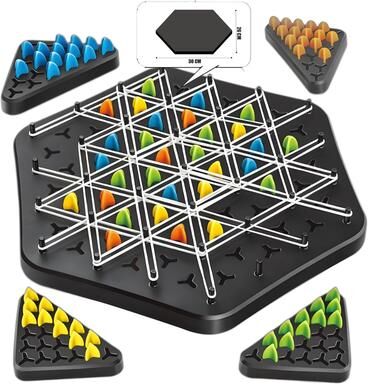
Uplift Picks Triangle Strategy Board Game Chain Chess Family Fun Logic Game 30x26 CmBring excitement to your game nights with this engaging strategy board game designed to challenge your thinking and spark fun competition. Perfect for both kids and adults, this family board game combines logic, planning, and interactive play. Its...57,98 $*Shipping: 0,00 $Secure redirect to the provider
-
SAFAVIEH Lemma Window Polyester Home Accent, Modern Sofa or Bed Accent"Lemma Window Home Accent: sheer polyester fabric and grommet top header The Lemma Window Home Accent is a modern home accent. This polyester home accent measures 51"" W x 84"" L. Available in 2 colorways: Grey and Lavander."21,16 $*Shipping: 0,00 $Secure redirect to the provider
-
What is the question about the Pumping Lemma?
The question about the Pumping Lemma typically asks students to use the lemma to prove that a given language is not regular. Students are usually asked to choose a specific string from the language, decompose it into three parts as per the lemma's requirements, and then show that no matter how the string is pumped, it will not remain in the language. This demonstrates that the language does not satisfy the conditions of the Pumping Lemma and therefore cannot be regular. **
-
What does the Pumping Lemma state for regular languages?
The Pumping Lemma for regular languages states that for any regular language L, there exists a pumping length p such that any string s in L with length at least p can be divided into three parts, u, v, and w, such that s = uvw, satisfying three conditions: 1) |uv| ≤ p, 2) |v| > 0, and 3) for all i ≥ 0, the string uv^iw is also in L. This lemma is used to prove that certain languages are not regular by showing that they do not satisfy the conditions of the Pumping Lemma. **
-
How does the pumping lemma for regular languages work?
The pumping lemma for regular languages states that for any regular language L, there exists a constant p such that any string s in L with length at least p can be divided into three parts, s = xyz, satisfying the following conditions: 1. |xy| ≤ p 2. |y| > 0 3. For all i ≥ 0, the string xy^iz is also in L. This lemma is used to prove that a language is not regular by assuming it is regular and then finding a string that violates the conditions of the pumping lemma. If no such string can be found, then the language may be regular. **
-
Why can't it be pumped with the pumping lemma?
The pumping lemma is a tool used to prove that a language is not regular. If a language cannot be pumped with the pumping lemma, it means that the language does not satisfy the conditions required for it to be regular. This could be due to the language having a non-regular structure or containing patterns that cannot be captured by a finite automaton. In other words, the language may have properties that cannot be replicated by the finite memory of a regular language. **
* All prices are inclusive of VAT and, if applicable, plus shipping costs. The offer information is based on the details provided by the respective shop and is updated through automated processes. Real-time updates do not occur, so deviations can occur in individual cases. ** Note: Parts of this content were created by AI.