Buy schachclub.eu ?
We are moving the project
schachclub.eu .
Are you interested in purchasing the domain
schachclub.eu ?
domain@kv-gmbh.de · 0541-91531010
Buy schachclub.eu ?
What is the difference between vocalic coda and consonantal coda?
A vocalic coda is the ending sound of a syllable that is a vowel or a diphthong, while a consonantal coda is the ending sound of a syllable that is a consonant. In other words, a vocalic coda ends with a vowel sound, while a consonantal coda ends with a consonant sound. For example, in the word "go," the "o" is a vocalic coda, while in the word "cat," the "t" is a consonantal coda. **
'Against the grandmaster in chess?'
Playing against a grandmaster in chess can be an incredibly challenging and intimidating experience. Grandmasters are among the best players in the world, with a deep understanding of the game and exceptional strategic skills. It is important to approach the game with humility and a willingness to learn, as playing against a grandmaster can provide valuable insights and opportunities for improvement. While the odds of winning may be slim, the experience of facing off against a grandmaster can be a valuable learning opportunity and a memorable experience for any chess enthusiast. **
Similar search terms for Coda
Top-Angebote
Products related to Coda:
-
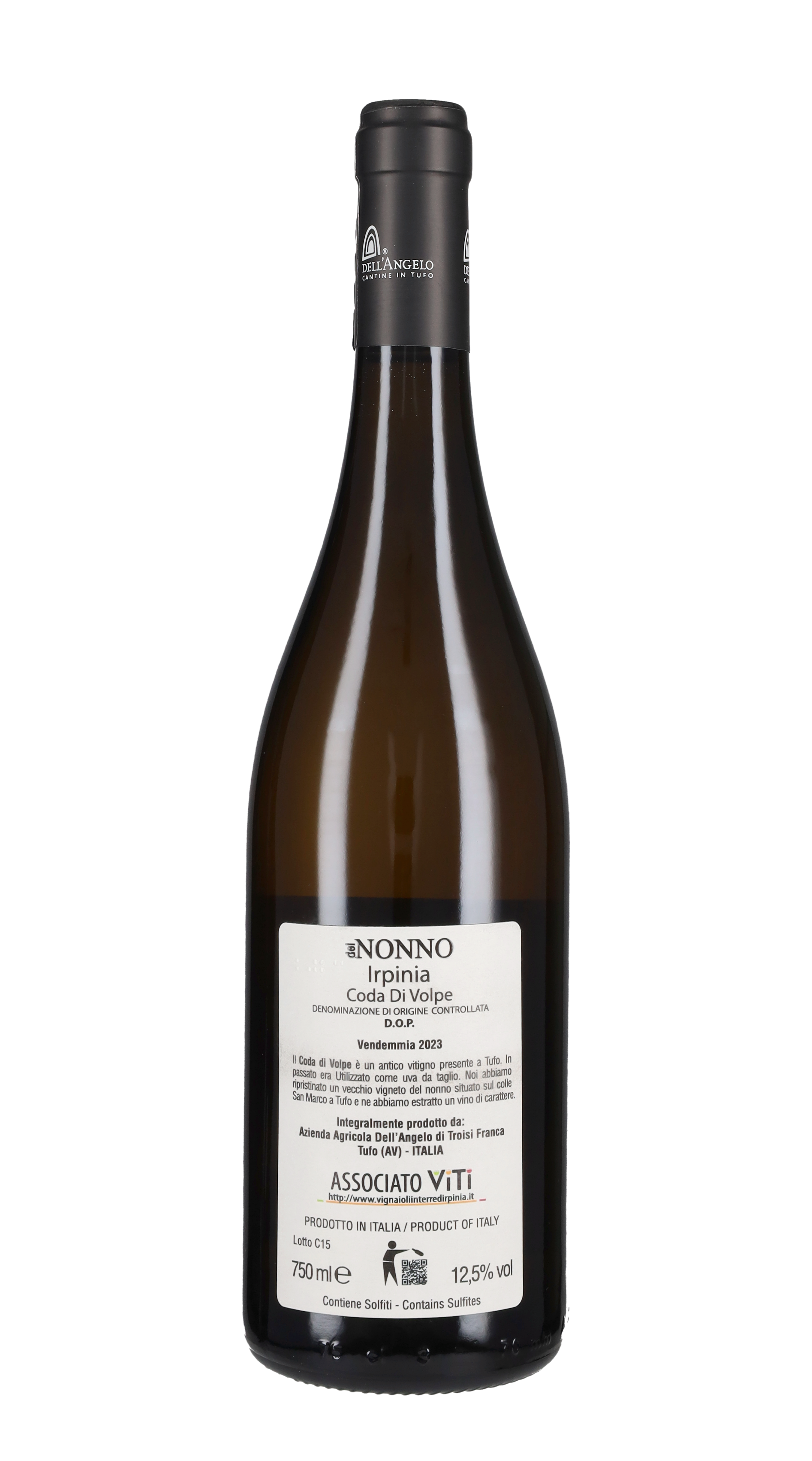
Coda di Volpe 'Del Nonno' Cantine dell'Angelo 2024The Coda di Volpe ‘Del Nonno’ from Cantine dell’Angelo is configured as a typically mineral interpretation of the Irpinia territory, particularly the area of Tufo. In fact, Angelo Muto, the owner of Cantine dell’Angelo, operates within the territory of Tufo, in the heart of Irpinia, in an area highly suited for the cultivation of the Greco grape, which is no coincidence the varietal symbol of the winery. This is accompanied by the Coda di Volpe, another native Campanian grape, entirely used by Angelo for the production of the label ‘Del Nonno’, the latter name deriving from the homonymous old vineyard from which the grapes come.The Coda di Volpe Cantine dell’Angelo ‘Del Nonno’ is made from only Coda di Volpe grapes coming from a old vineyard located on the San Marco hill in Tufo, cultivated using low environmental impact agronomic practices. Following the harvest, which is carried out entirely by hand, the bunches undergo a direct soft pressing, followed by spontaneous alcoholic fermentation in stainless steel tanks entrusted to only indigenous yeasts. The subsequent maturation phase also takes place in steel, containers in which the wine rests for a total period of about 10 months, of which 6 spent on the fine lees.‘Del Nonno’ Coda di Volpe from Cantine dell’Angelo has an intense straw yellow hue. The aromatic bouquet is described by fragrant floral hints of chamomile that combine with aromas of bergamot and sage, as well as intriguing mineral notes of sulfur. Agile and tasty tasting, deep and refreshing, endowed with a intensely savory finish. By virtue of its organoleptic characteristics, this white wine represents a winning pairing with seafood cuisine, particularly with mixed fried dishes, seafood risottos, or grilled fish.19,00 £*Shipping: 48,00 £Secure redirect to the provider
-
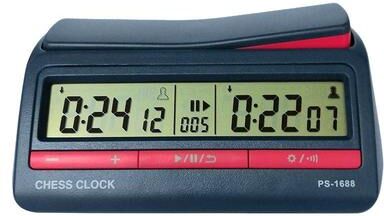
Everyday Crate ElitePro Digital Chess Timer & Go Game Clock With 42 Tournament Timing Modes ElitePro Digital Chess Timer & Go Game Clock With 42 Tournament Timing ModesEvery move counts when the pressure is on. Designed for competitive players, clubs, coaches, and tournament organizers, this advanced digital chess clock delivers precise, reliable time control for intense matches. With 42 preset timing rules across...64,97 $*Shipping: 0,00 $Secure redirect to the provider
-
Inspired Living Classic Staunton Wooden Chess Pieces Set (32pcs) Tournament Chessmen Replacement Set bBring the timeless elegance of chess back to your table with wooden chess pieces that feel as good as they look. This complete 32piece set is designed for players who want a classic, balanced style thats easy to recognize and satisfying to play...23,97 $*Shipping: 0,00 $Secure redirect to the provider

-
Can I become a chess grandmaster?
Becoming a chess grandmaster is a highly challenging and competitive endeavor that requires exceptional skill, dedication, and strategic thinking. While it is theoretically possible for anyone to become a grandmaster with enough practice and commitment, the reality is that only a very small percentage of chess players ever achieve this prestigious title. To become a grandmaster, one must typically start playing chess at a young age, receive expert coaching, participate in numerous tournaments, and consistently perform at a high level against top competition. It is important to set realistic goals and enjoy the journey of improving your chess skills, regardless of whether or not you ultimately reach the grandmaster level. **
-
How do you checkmate in chess?
To checkmate in chess, you need to put your opponent's king in a position where it is under attack and cannot escape capture. This means the king is in a position to be captured on the next move and there are no other legal moves available to get out of check. Checkmate ends the game immediately, and the player who achieves checkmate is declared the winner. It requires strategic planning, positioning your pieces effectively, and anticipating your opponent's moves to successfully checkmate in chess. **
-
How do I checkmate in chess?
To checkmate in chess, you need to put your opponent's king in a position where it is under attack and cannot escape capture. This means the king is in a position to be captured on the next move and there are no legal moves that can be made to prevent this. To achieve checkmate, you must use your pieces strategically to control key squares around the opponent's king and limit its movement until it is trapped. It is important to plan your moves carefully and anticipate your opponent's responses to successfully checkmate in chess. **
-
Where do exposition, development, recapitulation, and coda begin and end, and how can I recognize them?
Exposition, development, recapitulation, and coda are structural elements commonly found in classical music, particularly in sonata form. The exposition typically begins with the presentation of the main themes and ends with a closing section. The development section follows, where the themes are developed and transformed. The recapitulation then restates the main themes, often with some variations, and ends with a closing section. The coda is a concluding section that follows the recapitulation and provides a sense of finality. These sections can be recognized by changes in musical material, key, and overall structure, and are often marked by specific musical cues such as cadences or thematic restatements. **

Have you ever played against a chess grandmaster?
No, I have never played against a chess grandmaster. As a language model AI, I do not have the ability to play chess or any other games. However, playing against a grandmaster would be a challenging and exciting experience, as they are highly skilled and knowledgeable in the game of chess. **
From when is one a grandmaster in chess?
One becomes a grandmaster in chess when they achieve three grandmaster norms and a FIDE rating of at least 2500. Grandmaster norms are earned by achieving a high level of performance in designated chess tournaments, and they must be approved by the World Chess Federation (FIDE). Once a player meets these criteria, they are awarded the title of grandmaster, which is the highest title a chess player can achieve. **
Top-Angebote
Products related to Coda:
-
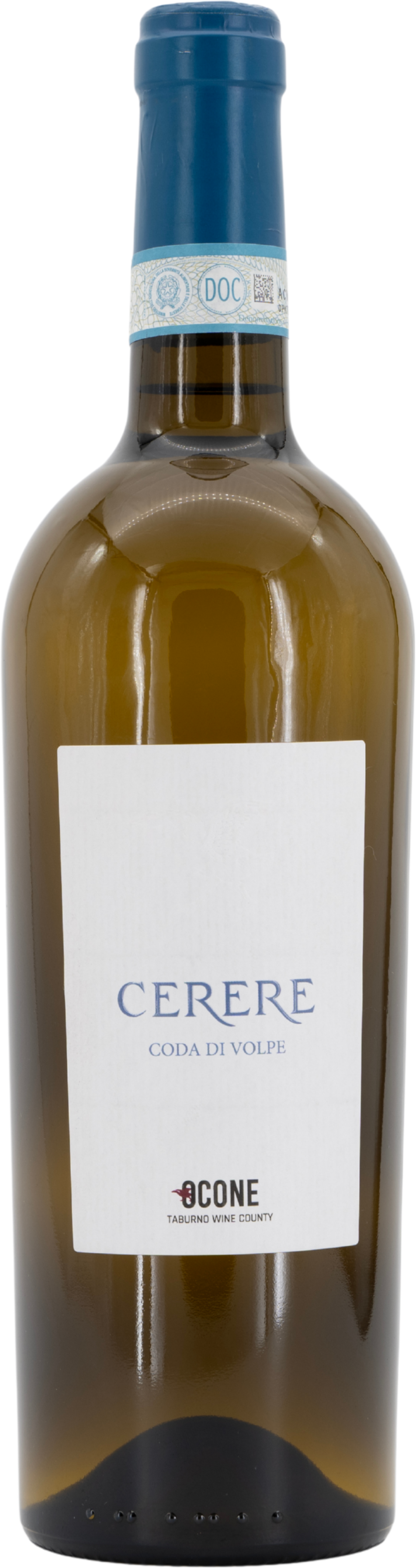
Coda di Volpe 'Cerere' Ocone 2025The Coda di Volpe from Ocone embodies a wish; it is associated with Cerere, a maternal deity of the earth and fertility; a goddess of the harvest directly linked to the healthy lushness of the white grape vineyards of this winery that began its activity in 1908 thanks to the far-sighted passion of Giuseppe Ocone and which in the following decades quickly became a top-level entrepreneurial and agricultural reality. Today Domenico Ocone and Nicola Pastore use modern technologies in the service of tradition, history, and environmental sustainability. We are at La Madonnella, on a vineyard of about 10 hectares, on hilly vineyards, cultivated with predominantly organic fertilizers. We are in the municipality of Ponte, with a South-West exposure, on medium consistency soils rich in clay, located about 300 meters above sea level. Here, after a brief maceration on the skins at low temperature, the Coda di Volpe "Cerere" from Ocone is left to mature for a few months in steel to not alter in any way the intrinsic characteristics of this great grape variety, too often forgotten. An ancient grape variety, from Roman times, not very vigorous, but it gives rise to wines of great aromatic complexity. “Cerere” is a Coda di Volpe that reveals all its complexity and elegance, with notes of wisteria and ripe yellow and white fleshed fruit. A Coda di Volpe with a truly enviable quality/price ratio…9,00 £*Shipping: 48,00 £Secure redirect to the provider
-
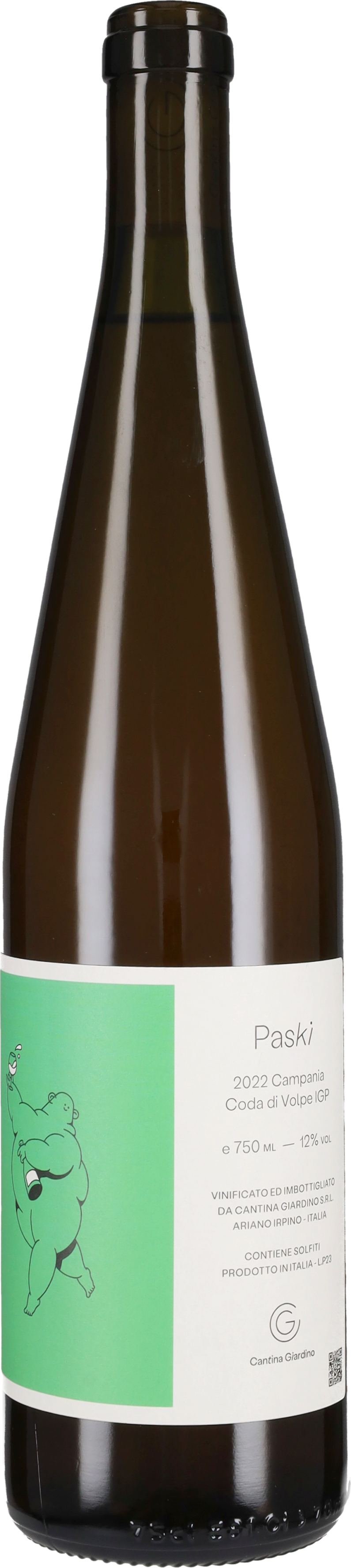
Coda di Volpe 'Paski' Cantina Giardino 2022The Coda di Volpe "Paski" by Cantina Giardino is a vertical white wine, just like the deep roots of the old 60-year-old native vines of Coda di Volpe that rise in the Irpinia area and are masterfully recovered and cultivated by the young winery. Young but with very clear ideas, that is to bring back to life, in the truest sense of the word, the territory and to offer panoramic insights to the imagination regarding the area through the enjoyment of this wine waiting to be discovered. The vines from which the Coda di Volpe grapes are harvested are wonderfully oriented to the South and are located at an altitude of 450 meters on a soil of limestone, sandy, and clay type. In the winery, only the operation of subtraction reigns: no clarifications, filtrations, and invasive interventions. Only manual labor and gestures follow the operation of destemming. After a 5-day maceration, the pressing is done with a wooden press, as in the past, and spontaneous fermentation takes place for a small percentage in small barrels of chestnut and the remaining in steel. The wine ages for a period of 12 months in chestnut barrels. The "Paski" Coda di Volpe is of intense straw yellow color, with cloudy hues as it is not filtered; everything that lives and brings positivity is never eliminated. On the nose, there is a slight volatile sensation, but it does not clash, rather it enhances this macerated white. It is intense and complex, requires oxygenation, with notes of honey and flowers combined with mineral puffs and gunpowder. On the palate, only what has undergone the fermentation process is felt: sublime acidity and a nearly tactile body at the sip. A wine with a taut, savory, and fresh tone that should not be drunk cold. A sip of pure rustic experience.22,00 £*Shipping: 48,00 £Secure redirect to the provider
-
Coda di Volpe 'Del Nonno' Cantine dell'Angelo 2024The Coda di Volpe ‘Del Nonno’ from Cantine dell’Angelo is configured as a typically mineral interpretation of the Irpinia territory, particularly the area of Tufo. In fact, Angelo Muto, the owner of Cantine dell’Angelo, operates within the territory of Tufo, in the heart of Irpinia, in an area highly suited for the cultivation of the Greco grape, which is no coincidence the varietal symbol of the winery. This is accompanied by the Coda di Volpe, another native Campanian grape, entirely used by Angelo for the production of the label ‘Del Nonno’, the latter name deriving from the homonymous old vineyard from which the grapes come.The Coda di Volpe Cantine dell’Angelo ‘Del Nonno’ is made from only Coda di Volpe grapes coming from a old vineyard located on the San Marco hill in Tufo, cultivated using low environmental impact agronomic practices. Following the harvest, which is carried out entirely by hand, the bunches undergo a direct soft pressing, followed by spontaneous alcoholic fermentation in stainless steel tanks entrusted to only indigenous yeasts. The subsequent maturation phase also takes place in steel, containers in which the wine rests for a total period of about 10 months, of which 6 spent on the fine lees.‘Del Nonno’ Coda di Volpe from Cantine dell’Angelo has an intense straw yellow hue. The aromatic bouquet is described by fragrant floral hints of chamomile that combine with aromas of bergamot and sage, as well as intriguing mineral notes of sulfur. Agile and tasty tasting, deep and refreshing, endowed with a intensely savory finish. By virtue of its organoleptic characteristics, this white wine represents a winning pairing with seafood cuisine, particularly with mixed fried dishes, seafood risottos, or grilled fish.19,00 £*Shipping: 48,00 £Secure redirect to the provider
-
What is the difference between vocalic coda and consonantal coda?
A vocalic coda is the ending sound of a syllable that is a vowel or a diphthong, while a consonantal coda is the ending sound of a syllable that is a consonant. In other words, a vocalic coda ends with a vowel sound, while a consonantal coda ends with a consonant sound. For example, in the word "go," the "o" is a vocalic coda, while in the word "cat," the "t" is a consonantal coda. **
-
'Against the grandmaster in chess?'
Playing against a grandmaster in chess can be an incredibly challenging and intimidating experience. Grandmasters are among the best players in the world, with a deep understanding of the game and exceptional strategic skills. It is important to approach the game with humility and a willingness to learn, as playing against a grandmaster can provide valuable insights and opportunities for improvement. While the odds of winning may be slim, the experience of facing off against a grandmaster can be a valuable learning opportunity and a memorable experience for any chess enthusiast. **
-
Can I become a chess grandmaster?
Becoming a chess grandmaster is a highly challenging and competitive endeavor that requires exceptional skill, dedication, and strategic thinking. While it is theoretically possible for anyone to become a grandmaster with enough practice and commitment, the reality is that only a very small percentage of chess players ever achieve this prestigious title. To become a grandmaster, one must typically start playing chess at a young age, receive expert coaching, participate in numerous tournaments, and consistently perform at a high level against top competition. It is important to set realistic goals and enjoy the journey of improving your chess skills, regardless of whether or not you ultimately reach the grandmaster level. **
-
How do you checkmate in chess?
To checkmate in chess, you need to put your opponent's king in a position where it is under attack and cannot escape capture. This means the king is in a position to be captured on the next move and there are no other legal moves available to get out of check. Checkmate ends the game immediately, and the player who achieves checkmate is declared the winner. It requires strategic planning, positioning your pieces effectively, and anticipating your opponent's moves to successfully checkmate in chess. **
Similar search terms for Coda
-
Everyday Crate ElitePro Digital Chess Timer & Go Game Clock With 42 Tournament Timing Modes ElitePro Digital Chess Timer & Go Game Clock With 42 Tournament Timing ModesEvery move counts when the pressure is on. Designed for competitive players, clubs, coaches, and tournament organizers, this advanced digital chess clock delivers precise, reliable time control for intense matches. With 42 preset timing rules across...64,97 $*Shipping: 0,00 $Secure redirect to the provider
-
Inspired Living Classic Staunton Wooden Chess Pieces Set (32pcs) Tournament Chessmen Replacement Set bBring the timeless elegance of chess back to your table with wooden chess pieces that feel as good as they look. This complete 32piece set is designed for players who want a classic, balanced style thats easy to recognize and satisfying to play...23,97 $*Shipping: 0,00 $Secure redirect to the provider
-
Multicon Wholesale Hub Professional Digital Chess Clock Timer With Count Up & Count Down For Tournament And Training Games Professional Digital Chess Clock Timer With Count Up & Count Down For Tournament And Training GamesExperience smoother, more competitive gameplay with this chess clock timer designed for players who value precision and focus. Whether you're preparing for tournaments, practicing strategy, or enjoying casual matches at home, this timer helps keep...103,97 $*Shipping: 0,00 $Secure redirect to the provider
-
Multisell Products Hub Easy To Play Chess Board Game Toy, Educational Strategy Table Games Easy To Play Chess Board Game Toy, Educational Strategy Table GamesEngage Your Mind with a Classic Chess Board Game The Chess Board Game Toy is a timeless strategy game that offers endless fun for both beginners and experienced players. Designed to be easy to play, this game is perfect for improving focus,...49,97 $*Shipping: 0,00 $Secure redirect to the provider
-
How do I checkmate in chess?
To checkmate in chess, you need to put your opponent's king in a position where it is under attack and cannot escape capture. This means the king is in a position to be captured on the next move and there are no legal moves that can be made to prevent this. To achieve checkmate, you must use your pieces strategically to control key squares around the opponent's king and limit its movement until it is trapped. It is important to plan your moves carefully and anticipate your opponent's responses to successfully checkmate in chess. **
-
Where do exposition, development, recapitulation, and coda begin and end, and how can I recognize them?
Exposition, development, recapitulation, and coda are structural elements commonly found in classical music, particularly in sonata form. The exposition typically begins with the presentation of the main themes and ends with a closing section. The development section follows, where the themes are developed and transformed. The recapitulation then restates the main themes, often with some variations, and ends with a closing section. The coda is a concluding section that follows the recapitulation and provides a sense of finality. These sections can be recognized by changes in musical material, key, and overall structure, and are often marked by specific musical cues such as cadences or thematic restatements. **
-
Have you ever played against a chess grandmaster?
No, I have never played against a chess grandmaster. As a language model AI, I do not have the ability to play chess or any other games. However, playing against a grandmaster would be a challenging and exciting experience, as they are highly skilled and knowledgeable in the game of chess. **
-
From when is one a grandmaster in chess?
One becomes a grandmaster in chess when they achieve three grandmaster norms and a FIDE rating of at least 2500. Grandmaster norms are earned by achieving a high level of performance in designated chess tournaments, and they must be approved by the World Chess Federation (FIDE). Once a player meets these criteria, they are awarded the title of grandmaster, which is the highest title a chess player can achieve. **
* All prices are inclusive of VAT and, if applicable, plus shipping costs. The offer information is based on the details provided by the respective shop and is updated through automated processes. Real-time updates do not occur, so deviations can occur in individual cases. ** Note: Parts of this content were created by AI.