Buy schachclub.eu ?
We are moving the project
schachclub.eu .
Are you interested in purchasing the domain
schachclub.eu ?
domain@kv-gmbh.de · 0541-91531010
Buy schachclub.eu ?
What are donors and acceptors in chemistry?
In chemistry, donors and acceptors refer to atoms or molecules that donate or accept electrons during a chemical reaction. Donors are species that donate electrons, typically through a lone pair of electrons, while acceptors are species that accept electrons, often through an empty orbital. This concept is important in understanding various chemical reactions, such as acid-base reactions and coordination complexes, where the transfer of electrons between donors and acceptors plays a crucial role in determining the outcome of the reaction. **
What are proton donors and acceptors in chemistry?
Proton donors are substances that can donate a proton (H+) to another substance in a chemical reaction. This typically involves the release of a hydrogen ion. Proton acceptors, on the other hand, are substances that can accept a proton in a chemical reaction, often by forming a covalent bond with the proton. In the context of acid-base reactions, proton donors are referred to as acids, while proton acceptors are referred to as bases. **

Similar search terms for Acceptors
Top-Angebote
Products related to Acceptors:
-
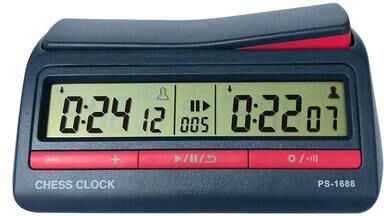
Multicon Wholesale Hub Professional Digital Chess Clock Timer With Count Up & Count Down For Tournament And Training Games Professional Digital Chess Clock Timer With Count Up & Count Down For Tournament And Training GamesExperience smoother, more competitive gameplay with this chess clock timer designed for players who value precision and focus. Whether you're preparing for tournaments, practicing strategy, or enjoying casual matches at home, this timer helps keep...103,97 $*Shipping: 0,00 $Secure redirect to the provider
-
Multisell Products Hub Easy To Play Chess Board Game Toy, Educational Strategy Table Games Easy To Play Chess Board Game Toy, Educational Strategy Table GamesEngage Your Mind with a Classic Chess Board Game The Chess Board Game Toy is a timeless strategy game that offers endless fun for both beginners and experienced players. Designed to be easy to play, this game is perfect for improving focus,...49,97 $*Shipping: 0,00 $Secure redirect to the provider
-
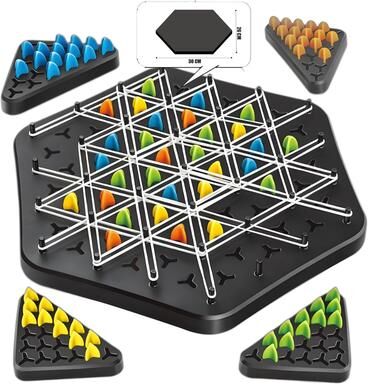
Uplift Picks Triangle Strategy Board Game Chain Chess Family Fun Logic Game 24x21 CmBring excitement to your game nights with this engaging strategy board game designed to challenge your thinking and spark fun competition. Perfect for both kids and adults, this family board game combines logic, planning, and interactive play. Its...47,98 $*Shipping: 0,00 $Secure redirect to the provider
-
Inspire Picks Magnetic Chess Board Game For Kids Strategy And Logical Thinking Fun ats30527 BSpark curiosity and sharpen young minds with a classic challenge made kidfriendly. This engaging magnetic chess board game helps children develop focus, patience, and problemsolving skills while having fun. Designed as a thoughtful educational logic...71,26 $*Shipping: 0,00 $Secure redirect to the provider


-
What is meant by proton donors and proton acceptors?
Proton donors are substances that can donate a proton (H+) to another substance. This typically involves the release of a hydrogen ion. Proton acceptors, on the other hand, are substances that can accept a proton from another substance. This typically involves the uptake of a hydrogen ion. In the context of acid-base reactions, proton donors are acids, while proton acceptors are bases. **
-
Why are carboxylic acids proton donors and amines proton acceptors?
Carboxylic acids are proton donors because they contain a highly electronegative oxygen atom that can stabilize the resulting carboxylate anion by delocalizing the negative charge. Amines, on the other hand, are proton acceptors because they contain a lone pair of electrons on the nitrogen atom that can readily accept a proton to form a positively charged ammonium ion. This ability to donate or accept protons is due to the presence of functional groups in these molecules that can easily gain or lose a hydrogen ion in solution. **
-
'Against the grandmaster in chess?'
Playing against a grandmaster in chess can be an incredibly challenging and intimidating experience. Grandmasters are among the best players in the world, with a deep understanding of the game and exceptional strategic skills. It is important to approach the game with humility and a willingness to learn, as playing against a grandmaster can provide valuable insights and opportunities for improvement. While the odds of winning may be slim, the experience of facing off against a grandmaster can be a valuable learning opportunity and a memorable experience for any chess enthusiast. **
-
Can I become a chess grandmaster?
Becoming a chess grandmaster is a highly challenging and competitive endeavor that requires exceptional skill, dedication, and strategic thinking. While it is theoretically possible for anyone to become a grandmaster with enough practice and commitment, the reality is that only a very small percentage of chess players ever achieve this prestigious title. To become a grandmaster, one must typically start playing chess at a young age, receive expert coaching, participate in numerous tournaments, and consistently perform at a high level against top competition. It is important to set realistic goals and enjoy the journey of improving your chess skills, regardless of whether or not you ultimately reach the grandmaster level. **

How do you checkmate in chess?
To checkmate in chess, you need to put your opponent's king in a position where it is under attack and cannot escape capture. This means the king is in a position to be captured on the next move and there are no other legal moves available to get out of check. Checkmate ends the game immediately, and the player who achieves checkmate is declared the winner. It requires strategic planning, positioning your pieces effectively, and anticipating your opponent's moves to successfully checkmate in chess. **
How do I checkmate in chess?
To checkmate in chess, you need to put your opponent's king in a position where it is under attack and cannot escape capture. This means the king is in a position to be captured on the next move and there are no legal moves that can be made to prevent this. To achieve checkmate, you must use your pieces strategically to control key squares around the opponent's king and limit its movement until it is trapped. It is important to plan your moves carefully and anticipate your opponent's responses to successfully checkmate in chess. **
Top-Angebote
Products related to Acceptors:
-
Everyday Crate ElitePro Digital Chess Timer & Go Game Clock With 42 Tournament Timing Modes ElitePro Digital Chess Timer & Go Game Clock With 42 Tournament Timing ModesEvery move counts when the pressure is on. Designed for competitive players, clubs, coaches, and tournament organizers, this advanced digital chess clock delivers precise, reliable time control for intense matches. With 42 preset timing rules across...64,97 $*Shipping: 0,00 $Secure redirect to the provider
-
Inspired Living Classic Staunton Wooden Chess Pieces Set (32pcs) Tournament Chessmen Replacement Set aBring the timeless elegance of chess back to your table with wooden chess pieces that feel as good as they look. This complete 32piece set is designed for players who want a classic, balanced style thats easy to recognize and satisfying to play...23,97 $*Shipping: 0,00 $Secure redirect to the provider
-
Multicon Wholesale Hub Professional Digital Chess Clock Timer With Count Up & Count Down For Tournament And Training Games Professional Digital Chess Clock Timer With Count Up & Count Down For Tournament And Training GamesExperience smoother, more competitive gameplay with this chess clock timer designed for players who value precision and focus. Whether you're preparing for tournaments, practicing strategy, or enjoying casual matches at home, this timer helps keep...103,97 $*Shipping: 0,00 $Secure redirect to the provider
-
Multisell Products Hub Easy To Play Chess Board Game Toy, Educational Strategy Table Games Easy To Play Chess Board Game Toy, Educational Strategy Table GamesEngage Your Mind with a Classic Chess Board Game The Chess Board Game Toy is a timeless strategy game that offers endless fun for both beginners and experienced players. Designed to be easy to play, this game is perfect for improving focus,...49,97 $*Shipping: 0,00 $Secure redirect to the provider
-
What are donors and acceptors in chemistry?
In chemistry, donors and acceptors refer to atoms or molecules that donate or accept electrons during a chemical reaction. Donors are species that donate electrons, typically through a lone pair of electrons, while acceptors are species that accept electrons, often through an empty orbital. This concept is important in understanding various chemical reactions, such as acid-base reactions and coordination complexes, where the transfer of electrons between donors and acceptors plays a crucial role in determining the outcome of the reaction. **
-
What are proton donors and acceptors in chemistry?
Proton donors are substances that can donate a proton (H+) to another substance in a chemical reaction. This typically involves the release of a hydrogen ion. Proton acceptors, on the other hand, are substances that can accept a proton in a chemical reaction, often by forming a covalent bond with the proton. In the context of acid-base reactions, proton donors are referred to as acids, while proton acceptors are referred to as bases. **
-
What is meant by proton donors and proton acceptors?
Proton donors are substances that can donate a proton (H+) to another substance. This typically involves the release of a hydrogen ion. Proton acceptors, on the other hand, are substances that can accept a proton from another substance. This typically involves the uptake of a hydrogen ion. In the context of acid-base reactions, proton donors are acids, while proton acceptors are bases. **
-
Why are carboxylic acids proton donors and amines proton acceptors?
Carboxylic acids are proton donors because they contain a highly electronegative oxygen atom that can stabilize the resulting carboxylate anion by delocalizing the negative charge. Amines, on the other hand, are proton acceptors because they contain a lone pair of electrons on the nitrogen atom that can readily accept a proton to form a positively charged ammonium ion. This ability to donate or accept protons is due to the presence of functional groups in these molecules that can easily gain or lose a hydrogen ion in solution. **
Similar search terms for Acceptors
-
Uplift Picks Triangle Strategy Board Game Chain Chess Family Fun Logic Game 24x21 CmBring excitement to your game nights with this engaging strategy board game designed to challenge your thinking and spark fun competition. Perfect for both kids and adults, this family board game combines logic, planning, and interactive play. Its...47,98 $*Shipping: 0,00 $Secure redirect to the provider
-
Inspire Picks Magnetic Chess Board Game For Kids Strategy And Logical Thinking Fun ats30527 BSpark curiosity and sharpen young minds with a classic challenge made kidfriendly. This engaging magnetic chess board game helps children develop focus, patience, and problemsolving skills while having fun. Designed as a thoughtful educational logic...71,26 $*Shipping: 0,00 $Secure redirect to the provider
-
Inspired Living Classic Staunton Wooden Chess Pieces Set (32pcs) Tournament Chessmen Replacement Set bBring the timeless elegance of chess back to your table with wooden chess pieces that feel as good as they look. This complete 32piece set is designed for players who want a classic, balanced style thats easy to recognize and satisfying to play...23,97 $*Shipping: 0,00 $Secure redirect to the provider
-
Uplift Picks Triangle Strategy Board Game Chain Chess Family Fun Logic Game 30x26 CmBring excitement to your game nights with this engaging strategy board game designed to challenge your thinking and spark fun competition. Perfect for both kids and adults, this family board game combines logic, planning, and interactive play. Its...57,98 $*Shipping: 0,00 $Secure redirect to the provider
-
'Against the grandmaster in chess?'
Playing against a grandmaster in chess can be an incredibly challenging and intimidating experience. Grandmasters are among the best players in the world, with a deep understanding of the game and exceptional strategic skills. It is important to approach the game with humility and a willingness to learn, as playing against a grandmaster can provide valuable insights and opportunities for improvement. While the odds of winning may be slim, the experience of facing off against a grandmaster can be a valuable learning opportunity and a memorable experience for any chess enthusiast. **
-
Can I become a chess grandmaster?
Becoming a chess grandmaster is a highly challenging and competitive endeavor that requires exceptional skill, dedication, and strategic thinking. While it is theoretically possible for anyone to become a grandmaster with enough practice and commitment, the reality is that only a very small percentage of chess players ever achieve this prestigious title. To become a grandmaster, one must typically start playing chess at a young age, receive expert coaching, participate in numerous tournaments, and consistently perform at a high level against top competition. It is important to set realistic goals and enjoy the journey of improving your chess skills, regardless of whether or not you ultimately reach the grandmaster level. **
-
How do you checkmate in chess?
To checkmate in chess, you need to put your opponent's king in a position where it is under attack and cannot escape capture. This means the king is in a position to be captured on the next move and there are no other legal moves available to get out of check. Checkmate ends the game immediately, and the player who achieves checkmate is declared the winner. It requires strategic planning, positioning your pieces effectively, and anticipating your opponent's moves to successfully checkmate in chess. **
-
How do I checkmate in chess?
To checkmate in chess, you need to put your opponent's king in a position where it is under attack and cannot escape capture. This means the king is in a position to be captured on the next move and there are no legal moves that can be made to prevent this. To achieve checkmate, you must use your pieces strategically to control key squares around the opponent's king and limit its movement until it is trapped. It is important to plan your moves carefully and anticipate your opponent's responses to successfully checkmate in chess. **
* All prices are inclusive of VAT and, if applicable, plus shipping costs. The offer information is based on the details provided by the respective shop and is updated through automated processes. Real-time updates do not occur, so deviations can occur in individual cases. ** Note: Parts of this content were created by AI.